You usually notice it in motion.
A pause on the stairs.
Grocery bags that need to be set down halfway to the kitchen.
The small thought, before standing up from the floor, of where your hand will go.
You don't need a dramatic before-and-after to feel it. Nothing in the mirror has changed enough to explain it. That is the point.
Capacity often shifts before appearance does, and the day is where it first becomes visible.
The First Signs Show Up in Ordinary Moments
Most change announces itself through action, not image.
It arrives as friction, in places that used to pass without comment.
The Stairs That Used to Feel Normal
Stairs are honest.
They don't care what you looked like last summer or whether your clothes still fit. They ask the same question every time.
For a long while, you answer without noticing.
Then one day you hear your breath at the top.
Or you reach for the rail.
Or you slow down while telling yourself you're not slowing down.
The staircase has not changed.
Your relationship to it has.
Grocery Bags, Laundry, and the Weight That Suddenly Matters
A grocery bag is ordinary until it isn't.
The same is true of a basket of laundry, a case of water, a suitcase pulled from the trunk.
These things reveal how much reserve was there, and how much is left after a normal day.
What stands out is not drama.
It is the new calculation.
Two trips instead of one.
A brief stop in the doorway.
A shift of weight before moving again.
The body still looks familiar.
The errand feels different.
Getting Up From the Floor Without Thinking About It
Few movements say more than rising from the floor.
It is simple, private, and easy to ignore until it loses its ease.
At first the change is small.
A hand presses into a thigh.
A knee needs a moment.
The motion becomes a sequence instead of a single thought.
Independence is often felt there—in whether you can get down and back up without negotiating with yourself.
Appearance Can Stay the Same While Reserve Shrinks
This is where the mirror falls behind.
A body can look much the same while daily tasks start costing more.
Appearance is stillness. Daily life is demand.
Why the Mirror Often Lags Behind Daily Life
A person can seem unchanged while walking, carrying, turning, bending, and recovering all tell a different story.
That is why photos often miss what a Tuesday afternoon shows.
The shape is familiar.
The effort is not.
The difference appears only when the body is asked for something.
What Muscle Can Hint At, Without Telling the Whole Story
Muscle belongs in this conversation, but it isn't the headline.
Less muscle can mean less support for lifting, climbing, or getting up from low surfaces. It can narrow the margin that once made ordinary tasks easy.
But muscle alone doesn't explain the whole picture.
Two people can look similar and move through a day very differently.
Capacity lives in coordination, balance, endurance, timing, confidence, and recovery too.
The Body as It Is Used, Not Just as It Looks
It helps to stop thinking of the body as an image and start seeing it as a companion in use.
How does it answer when the day asks for more?
How much does it keep in reserve?
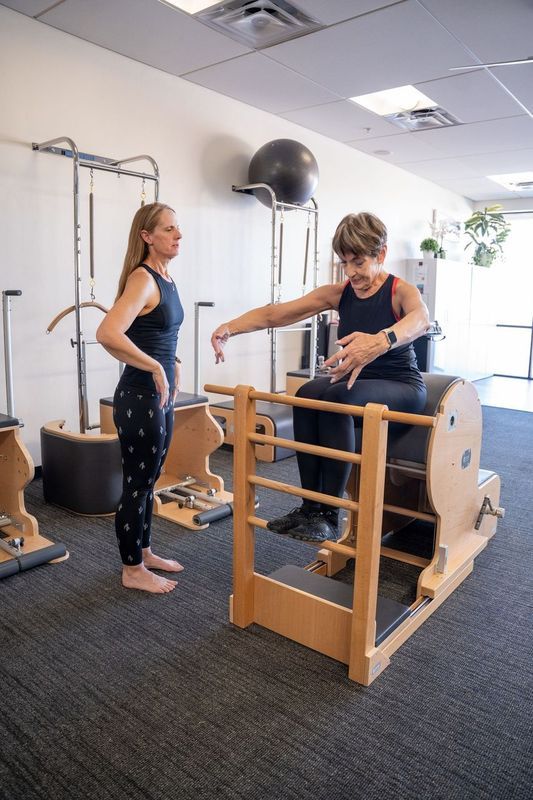
This is one reason individualized movement work can matter. The point is not how effort looks. The point is how a body carries, reaches, turns, rises, and returns to ease.
Daily Life Gives Better Clues Than Appearance Ever Will
The clearest measures are rarely dramatic.
They hide inside routines.
Travel, Luggage, and the Strain of Long Days
Travel makes this plain.
- Airports.
- Curbs.
- Rolling bags.
- Overhead bins.
- Long walks.
- Hard chairs.
- Delayed meals.
- Standing in lines.
None of it is heroic.
It is only a day that keeps asking.
Reserve shows up in how long you can stay comfortable while being mildly inconvenienced.
It shows up on hotel stairs after a day of walking, or in the way a carry-on feels heavier at the gate than it did in the driveway.
It shows up in whether the last hour of the trip feels like the first.
Recovery After a Busy Day or Hard Week
Sometimes the change is not in the task.
It is in what comes after.
A day of errands that once passed without a trace now asks for the whole evening back.
A weekend with family takes longer to recover from than it used to.
Recovery is easy to dismiss because it happens later.
Still, it belongs to capacity.
What matters is not only whether you can do the thing, but what the thing costs you after it is over.
Sometimes the body is not saying no. It is saying: Not at that price again tomorrow.
Participation Feels Different When Effort Takes Up More Space
People often keep doing what matters to them.
They still travel.
Host.
Play on the floor.
Carry the groceries.
Go out.
Say yes.
But more of their attention goes to pacing, resting, sitting, planning, and deciding what can wait until tomorrow.
That shift changes participation.
Life is still happening, but effort takes up more room inside it.
When that happens, confidence can shrink before anyone else sees a difference.
What Changes Is Not Only Strength, But Freedom
Capacity has a close relationship with freedom.
Not grand freedom.
Everyday freedom.
It decides how spontaneous life feels.
Independence Is Often Felt in Small, Private Ways
It lives in reaching the top shelf without a second thought.
Bringing in the laundry.
Kneeling to find something under the bed.
Standing back up.
Moving on.
These moments have no audience.
They don't get photographed.
They are still full of meaning.
A simple home life depends on hundreds of small actions staying easy enough.
When they stop being automatic, the day grows edges.
Adaptation Can Look Like Wisdom, Not Defeat
People adapt all the time, and often well.
They pack lighter.
They leave earlier.
They sit to fold clothes.
They use the rail.
They choose shoes with more care.
None of that is failure.
It is attention.
Sometimes adaptation is what keeps participation intact.
It lets a person stay in the shape of their life, even as the terms change.
There is dignity in that.
There is honesty in it too.
A Quieter Way to Measure a Body
A body is not only what it shows.
It is what it lets you do with little fuss.
It is the space between effort and strain.
Between doing the thing and paying for it later.
You can hear it in how someone talks about a day.
"I'm fine, I just need a minute."
"I'll make two trips."
"Give me a hand with this one."
Those are not small comments.
They are measurements.
That measure is easy to miss because it hides inside common scenes.
Stairs.
Bags.
Floor level.
A long day out.
The morning after.
Yet those are the places where the truth tends to appear first, long before appearance catches up.
The Day Tells You First
If you want to know how a body is doing, watch what happens in the middle of ordinary life.
Watch the carrying.
The rising.
The recovery.
The return.
The mirror may keep offering the same familiar outline.
The day notices sooner.
It notices in the hand on the railing, the extra trip for the groceries, and the small pause before standing—
where the real measure has been living all along.