Safety Is the Gateway to Strength

At Swan Pilates, safety is not a side conversation.
It is the doorway through which all progress must pass.
Before strength improves, before coordination refines, before endurance increases, the body performs a quiet internal assessment: Is this environment trustworthy enough to change?
If the answer is no, adaptation does not occur—no matter how motivated, disciplined, or compliant a person may be.
This is not a mindset issue.
It is a biological one.
Why the Body Refuses to Change Under Pressure
The nervous system is designed to prioritize survival before development. When conditions feel rushed, unpredictable, or overwhelming, resources are redirected toward vigilance rather than growth.
This is why people can train consistently, follow instructions precisely, and still feel stalled. The body may execute movement while withholding investment.
At Swan, we recognize this immediately.
And we don’t push through it.
Safety Is a Pattern, Not a Feeling
Safety does not mean comfort.
It does not mean ease.
It does not mean lowering standards.
Safety means the system can anticipate what is coming and trust that recovery is built in.
When these conditions are present:
· unnecessary muscular guarding softens
· breathing becomes more efficient
· coordination improves
· learning accelerates
When they are absent, the body conserves—often subtly, often invisibly.
Progress slows not because the work is wrong, but because the conditions are incomplete.
Pilates as a Nervous-System Practice
Pilates, when taught with precision, establishes safety exceptionally well.
At Swan, this shows up through:
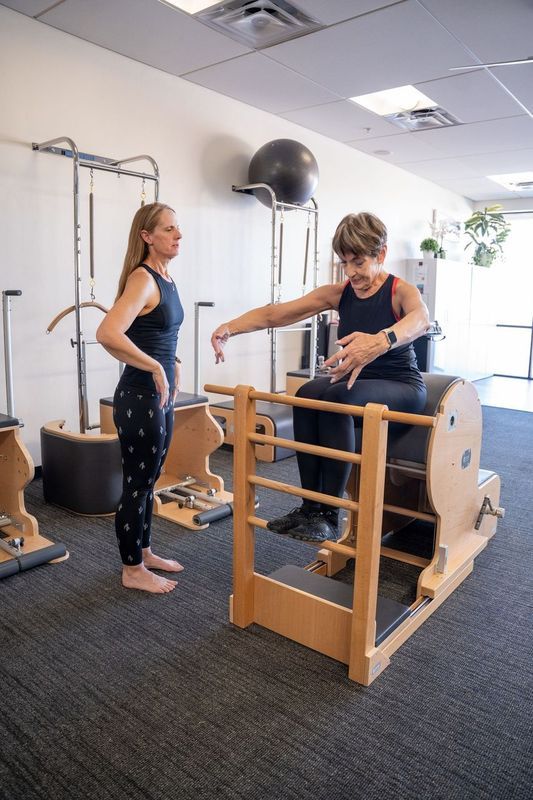
· clear, consistent cueing
· logical sequencing rather than novelty-driven programming
· controlled transitions
· breath awareness without forcing
· progressions based on readiness, not ambition
Each of these choices communicates something essential to the nervous system: you can stay present here.
Only then does the body allow complexity, strength, and range to expand.
Why Intensity Has a Ceiling
Intensity can produce short-term gains.
It cannot create durability on its own.
When the nervous system remains on alert, intensity diverts energy away from:
· tissue repair
· skill integration
· long-term resilience
This is why Swan prioritizes conditions over spectacle. Strength that cannot be recovered from, repeated, or sustained is not strength—it is expenditure.
Designed Environments Create Trust
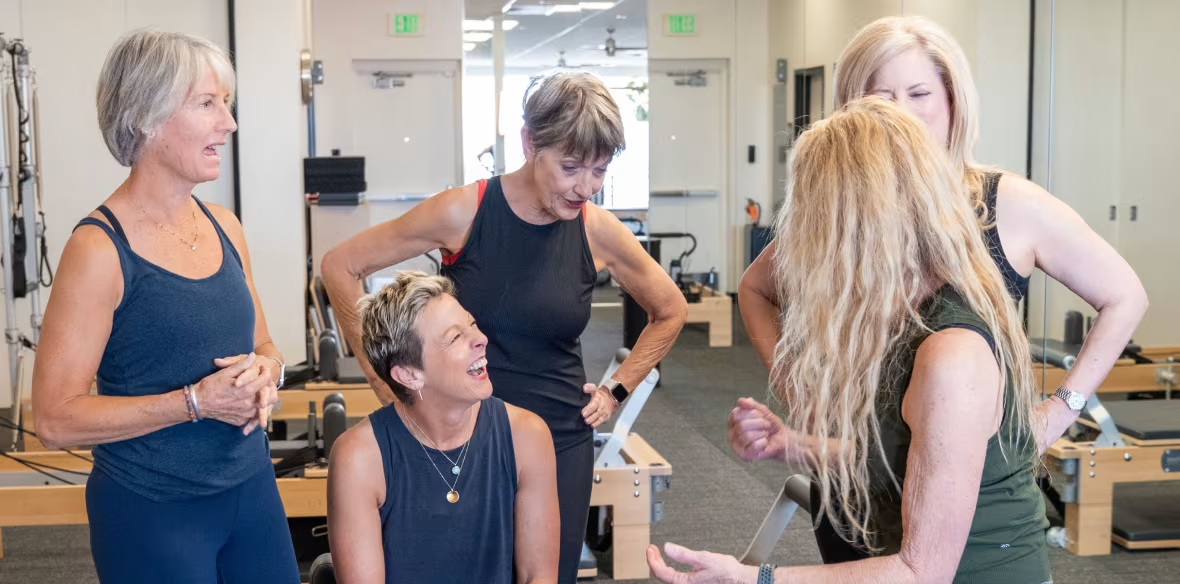
Safety should not be something a client has to manufacture internally. It should be evident in the room, the structure, and the teaching itself.
At Swan, safety is embedded through:
· small group size
· predictable session flow
· respectful pacing
· absence of performance pressure
· metrics used for insight, not comparison
When the environment is coherent, the body stops scanning for threat and begins participating fully.
What Growth Actually Looks Like
Growth at Swan rarely announces itself dramatically.
It shows up as:
· steadier balance
· improved coordination
· reduced reactivity
· clearer body awareness
· strength that feels available, not forced
First comes stability.
Then adaptability.
Then power.
Reversing this order never works for long.
Safety Builds Capacity, Not Fragility
Emphasizing safety does not weaken the system.
Safety is what allows challenge to be metabolized rather than resisted. It allows recovery to restore rather than merely compensate. It allows learning to integrate instead of evaporating under stress.
Safety is not softness.
Safety is structural intelligence.
The First Requirement for Lasting Change
If health is meant to last—and compound over time—then safety is not optional.
At Swan Pilates, safety is the entry condition for strength, mobility, and vitality. Without it, effort leaks. With it, effort accumulates.
This is where real change begins.