Health Is Not a Cost. It’s a Strategic Asset.

Most people have been taught to think about health the wrong way.
Health is treated as a cost — something to manage, minimize, insure against, or postpone dealing with until something breaks. In that framing, wellness becomes episodic: a class here, a program there, a burst of effort followed by drift. Even the most well-intentioned people end up cycling between urgency and neglect.
That framing error quietly determines everything that follows.
Because if health is a cost, the goal becomes spending as little as possible — of time, attention, money, and effort. And costs, by definition, are something we try to reduce.
But health does not behave like a cost.
Health behaves like an asset — one that appreciates or depreciates over time based on how it is treated.
Once you see that clearly, the entire conversation changes.
Health Appreciates — Or It Depreciates
Assets have predictable characteristics. They respond to conditions. They compound when cared for properly. They lose value when neglected or stressed beyond capacity.
Health works the same way.
When attention, nourishment, movement, recovery, and regulation are present consistently, health appreciates. Capacity grows. Resilience increases. Decision-making improves. Energy becomes more reliable. The system becomes easier to live inside.
When those conditions are absent — even subtly — health depreciates. Not always dramatically at first. Often quietly. A little less margin. A little more fatigue. A little more reactivity. A little less trust in the body.
Nothing catastrophic needs to happen for depreciation to be real.
This is why “feeling fine” is not a meaningful metric. Appreciation and depreciation are long-game processes. They reveal themselves over time.
Why the Wellness Industry Often Misses the Mark
Much of what is labeled “wellness” focuses on interventions, not assets.
Fix this symptom. Try this method. Optimize this one variable. Start over on Monday.
That approach can create short-term change, but it rarely creates appreciation. Why? Because it treats health as something external — something to apply, consume, or chase — rather than something to cultivate.
An asset requires stewardship. Not control. Not force. Stewardship means understanding the conditions under which value grows.
Health is no different.
Without that lens, people work harder than necessary and get less durable results. They oscillate between effort and exhaustion. They confuse intensity with progress. And when results don’t last, they assume personal failure rather than a flawed model.
A Different Way of Thinking — and Living
When health is understood as a strategic, appreciating asset, priorities shift naturally.
Decisions become less reactive and more coherent.
Consistency matters more than intensity.
Safety becomes foundational, not optional.
Metrics become feedback, not judgment.
This lens applies everywhere — not just in a studio or a program.
It applies to how we move, how we eat, how we rest, how we work, and how we design environments that people actually inhabit day after day. It applies to leadership, to creativity, and to embodied living.
Most importantly, it restores agency.
An asset is something you can tend, grow, and protect over time. You are no longer at war with your body, nor waiting for it to fail before paying attention. You are participating in its appreciation.
How This Looks in Practice
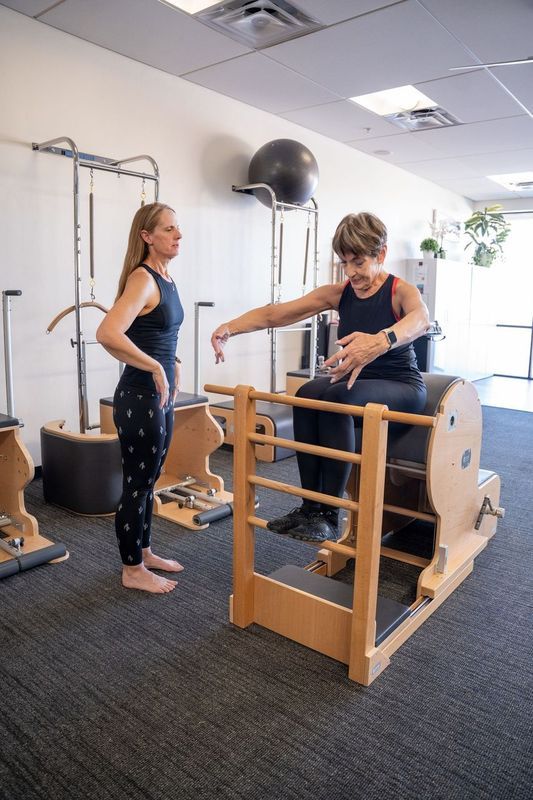
At Swan: Pilates & Wellness, this lens informs everything we do.
Movement is not about burning off yesterday or earning tomorrow. It’s about building capacity the body can trust. Nutrition is not about restriction or moral judgment, but about supplying what allows systems to function and recover. Measurement is used carefully — not to shame or compare, but to inform and guide.
This approach produces quieter results at first. But they last.
Clients don’t just feel “better.” They become more stable. More capable. More at ease inside themselves. Over time, that stability compounds — physically, mentally, and emotionally.
That is what appreciation looks like.
This Is Where We Begin
Reframing health as an appreciating asset is not semantic. It changes behavior. It changes expectations. It changes what people are willing to protect and sustain.
Once that shift happens, everything else becomes easier : safety, metrics, nourishment, movement, and choice.
This is the foundation.
Everything that follows builds from here.